
Learn how to download your Kotak Neo demat holding statement on ntrade.kotakneo.com — login, open Reports, and download as PDF or Excel.

Learn how to download your Kotak Neo demat holding statement on ntrade.kotakneo.com — login, open Reports, and download as PDF or Excel.

Learn how to download your ICICI Direct stock portfolio report as Excel or CSV — login, open Portfolio → Stocks, and download from the Stocks page.

Two ways to download your HDFC Securities demat holding statement — via Portfolio → Equity export, or Profile → Reports → Demat Holding Statement.

Step-by-step guide to download your Axis Direct demat holding statement on SimpleHai web and the Axis Direct app, as PDF, Excel or email.

The US stock market can look very different depending on which index you follow. The Dow Jones tracks 30 established blue-chip companies, the S&P 500 covers a much broader mix of large US businesses, while the Nasdaq is more heavily tilted towards technology and growth companies. Much like the Sensex and Nifty 50 in India, these indices act as quick gauges of market performance, but each tells a different part of the story. This guide…

Nearly every US-listed stock trades on one of two major exchanges, the New York Stock Exchange (NYSE) or Nasdaq. While the names are often mentioned together, the two exchanges differ in how they operate, how trades are matched, and the types of companies they attract. These differences help explain why certain companies list on one exchange rather than the other. This guide breaks down NYSE vs Nasdaq, their key differences, listing requirements, trading systems, and…

The NYSE and Nasdaq trade from 9:30 AM to 4:00 PM ET, Monday to Friday. For Indian investors, this translates to 7:00 PM–1:30 AM IST during daylight saving time and 8:00 PM–2:30 AM IST during standard time. Knowing these timings helps track US stocks, earnings and market developments. What Are the US Stock Market Timings? NYSE and Nasdaq follow the same regular stock market hours. SessionUS Eastern TimeRegular trading9:30 AM to 4:00 PM ETTrading daysMonday…
Thinking of investing in a New Fund Offer? Learn the benefits, disadvantages, and risks of NFOs today!
Confused about NFO vs mutual fund investing? Learn the real difference between NFO and mutual fund schemes: pricing, tax, liquidity, and SEBI’s 2026 rules explained.
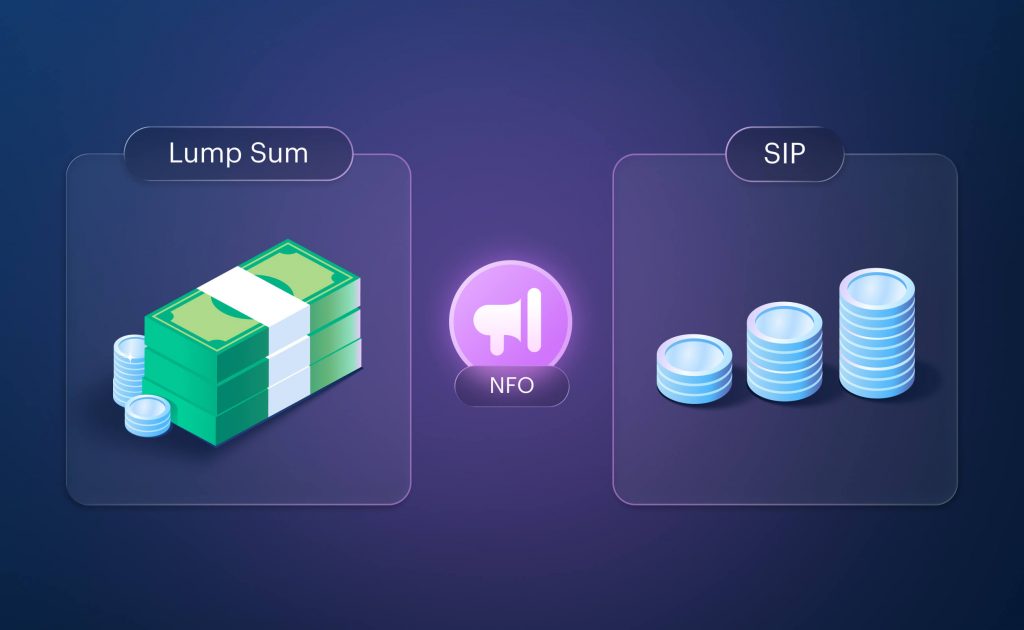
A new fund hits the market, and the marketing push starts immediately: “Limited period offer, units at ₹10, invest now.” Many investors feel pressure to write a lump sum cheque before the window closes. But you actually have a second option that most NFO pitches gloss over: you can approach the same new fund gradually, through a Systematic Investment Plan, instead of committing a lump sum on day one. That’s the real question behind NFO…
The blog posts/articles on our platform are purely the author’s personal opinion and do not necessarily represent the views of Anchorage Technologies Private Limited (ATPL) or any of its associates. The content in these posts/articles is for informational and educational purposes only and should not be construed as professional financial advice. Should you need such advice, please consult a professional financial or tax advisor. The content on our platform may include opinions, analysis, or commentary, which are subject to change, without notice, based on market conditions or other factors. Further, the use of any third-party websites or services linked on the website is at the user's discretion and risk. ATPL is not responsible for the content, accuracy, or security of external sites. Investments in the securities market are subject to market risks. Read all the related documents carefully before investing. Registration granted by SEBI, membership of BASL (in case of IAs) and certification from NISM in no way guarantee performance of the intermediary or provide any assurance of returns to investors. The examples and/or securities quoted (if any) are for illustration only and are not recommendatory. Any reliance you place on such information is strictly at your own risk. In no event will ATPL be liable for any loss or damage including without limitation, indirect or consequential loss or damage, or any loss or damage whatsoever arising from loss of data or profits arising out of, or in connection with, the use of this website.
By accessing this platform and its blog section, you acknowledge and agree to the Terms and Conditions of this website, Privacy Policy and Disclaimer.