Last Updated on Aug 26, 2026 by Aishika Banerjee
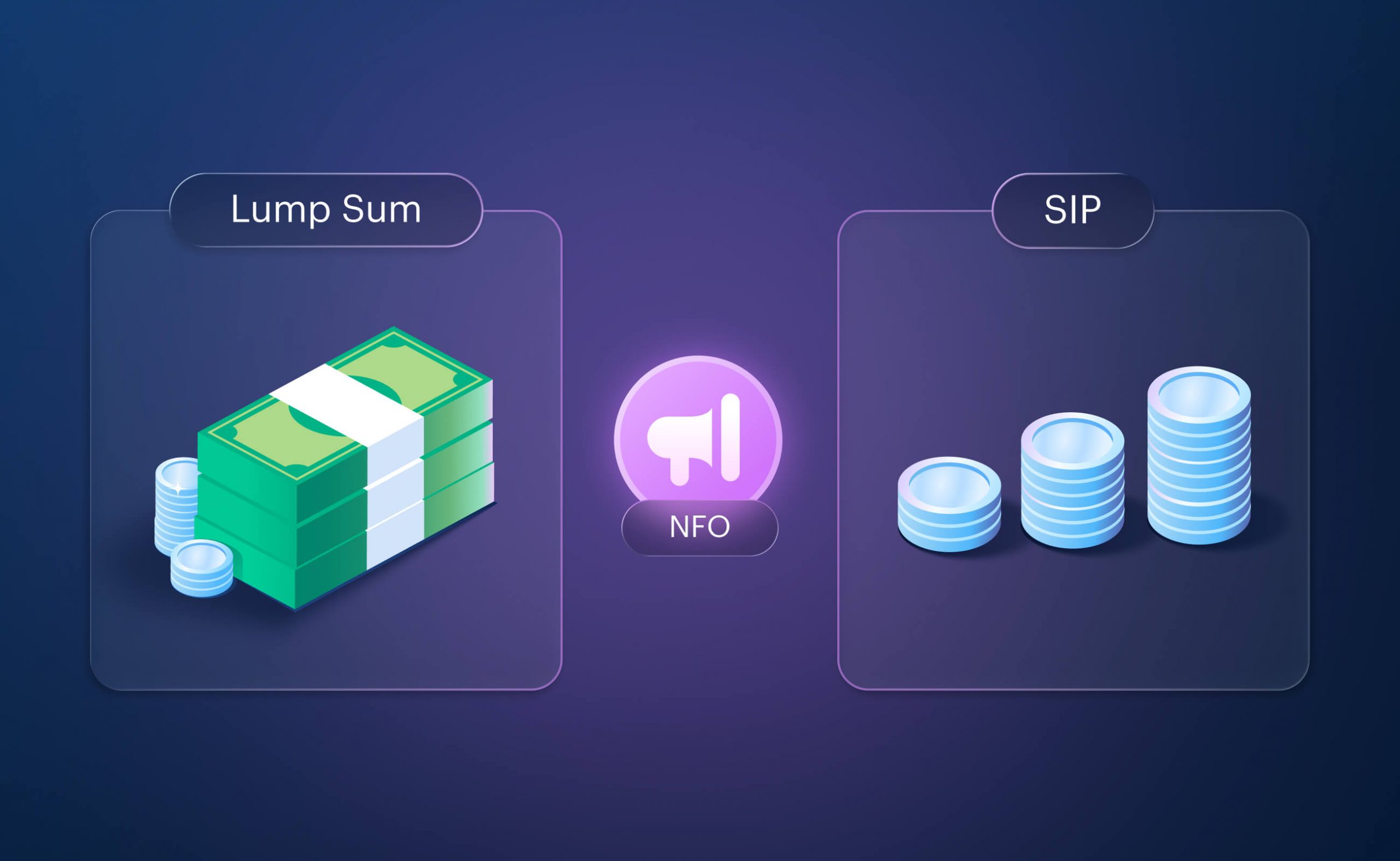
A new fund hits the market, and the marketing push starts immediately: “Limited period offer, units at ₹10, invest now.” Many investors feel pressure to write a lump sum cheque before the window closes. But you actually have a second option that most NFO pitches gloss over: you can approach the same new fund gradually, through a Systematic Investment Plan, instead of committing a lump sum on day one.
That’s the real question behind NFO vs SIP: not which product is better, but which entry method makes more sense when you’re putting money into an unproven scheme. This article breaks down what each term actually means, whether you can combine them, why cost averaging matters so much when a fund has no track record, and how to decide which approach fits your investor profile.
Table of Contents
What is an NFO?
An NFO (New Fund Offer) is the subscription window during which an Asset Management Company (AMC) launches a mutual fund scheme for the first time. During this period, typically a couple of weeks, the AMC offers units at a fixed face value, usually ₹10, and collects money from investors before the scheme starts investing that corpus in the market.
An NFO isn’t a separate asset class. It’s simply the earliest stage of a mutual fund’s life, the point before it has a portfolio, a NAV history, or any evidence of how the fund manager executes the stated strategy. Once the offer period closes and the AMC allots units, the scheme reopens for regular purchase and redemption (if open-ended) or lists on an exchange (if close-ended), and from that point on it behaves like any other mutual fund.
Most investors enter an NFO with a lump sum, paying the full amount upfront at the fixed offer price. That single-shot entry is exactly what makes the comparison with SIP investing worth examining.
What is a SIP?
A SIP (Systematic Investment Plan) is a method of investing a fixed amount into a mutual fund at regular intervals, usually monthly, through an auto-debit mandate from your bank account. A SIP isn’t a fund type either; it’s a way of buying into any mutual fund scheme, whether that scheme has existed for ten years or ten days.
Each SIP installment buys units at whatever the fund’s NAV happens to be on that date. Most AMCs let you start a SIP with amounts as low as ₹100 to ₹500 a month, and you can pause, increase, decrease, or stop the mandate whenever you choose. Because you invest small amounts repeatedly rather than one lump sum, SIP investing builds market exposure gradually instead of all at once, and it forces the discipline of investing on a fixed schedule regardless of what the market is doing that week.
NFO vs SIP: Key Differences
| Parameter | NFO (New Fund Offer) | SIP (Systematic Investment Plan) |
| What it is | A launch-stage subscription window for a new scheme | A recurring payment method for investing in any scheme |
| Entry style | Typically a one-time lump sum at a fixed offer price | Fixed amount invested at regular intervals, usually monthly |
| Price basis | Fixed face value, usually ₹10 per unit | Prevailing NAV on each installment date |
| Timing risk | Concentrated in a single entry point | Spread across multiple entry points through rupee cost averaging |
| Track record required | None; the fund has no history yet | You can and should check the fund’s track record before you start |
| Discipline required | One decision, one transaction | Ongoing commitment across months or years |
| Minimum amount | Set by the AMC, often ₹500 to ₹5,000 for lump sum | Often as low as ₹100 to ₹500 per installment |
| Flexibility to pause or stop | Not applicable; it’s a one-time subscription | You can pause, modify, or cancel the mandate anytime |
| Best suited for | Investors who want targeted exposure to a specific new strategy | Investors who want disciplined, long-term wealth building |
Can You Invest in an NFO Through a SIP?
Yes, and this is where the NFO vs SIP framing gets a little more nuanced than a simple either/or choice. If the scheme’s offer document permits it, you can register a SIP mandate at the same time you submit your NFO application. The AMC processes your first installment during the NFO period itself, and once the scheme reopens for regular transactions (typically within about five business days of allotment), your subsequent SIP installments continue automatically at the prevailing NAV.
This matters because NFO and SIP aren’t actually competing categories. An NFO describes what you’re buying (a brand-new scheme), while a SIP describes how you’re buying it (in instalments rather than all at once). You can invest in an NFO via lump sum, you can invest in an NFO via SIP, and you can invest in an established fund via either method too.
That said, starting a SIP into an NFO doesn’t erase the risks specific to new funds. The scheme still has no performance history, and the fund manager still has to build the entire portfolio from scratch after allotment. A SIP smooths out your entry price over time, but it doesn’t verify the fund manager’s execution skill or protect you from picking a strategy that turns out to be poorly timed for the category. Before you commit to a SIP in any NFO, check that the AMC has a credible track record with similar mandates, and confirm the new scheme actually fills a gap in your portfolio rather than duplicating something you already hold.
Rupee Cost Averaging: Why SIP Reduces Timing Risk (and NFO Doesn’t)
Rupee cost averaging is the mechanism that makes SIP investing structurally different from a lump sum NFO entry, and it’s worth understanding precisely why it matters.
When you invest a fixed amount at regular intervals, you automatically buy more units when the NAV is low and fewer units when the NAV is high. Over enough installments, this averages out your purchase cost and reduces the odds that you bought most of your position right before a downturn. You never have to correctly time the market, because you’re never putting all your money in at a single price point.
A lump sum NFO investment works the opposite way. You commit your full amount at one fixed offer price, and everything then depends on what happens to markets and to the fund’s execution right after that point. If the fund manager deploys your money into an expensive market, or if a correction hits shortly after allotment, you absorb that full impact with no averaging to soften it. SEBI’s rule requiring AMCs to deploy NFO proceeds within 30 business days of allotment (extendable to 60 in specific cases) actually sharpens this risk: the fund manager has a hard deadline to put your money to work, which leaves less room to wait out unfavourable conditions before buying.
This is precisely why combining a SIP with a new fund, rather than a lump sum NFO entry, gives you a genuine structural advantage. You still take on the fund’s execution risk, but you no longer concentrate your entire investment at a single, unproven entry point.
NFO vs SIP: Which Is Better for Your Investor Profile?
There’s no universal winner in the NFO vs SIP decision; the right choice depends on what you’re trying to achieve and how much conviction you have in a specific new strategy.
- If you’re a first-time or conservative investor, a SIP into an existing fund with a multi-year track record generally makes more sense than a lump sum NFO commitment. You get real performance data to evaluate, and the SIP structure builds the habit of regular investing without requiring you to bet on an unproven strategy.
- If you have a large lump sum and strong conviction in a specific new category, an NFO can make sense, but you reduce your risk considerably by entering through a SIP rather than a single lump sum payment, or by splitting your lump sum into several tranches over the following months instead of deploying it all at once.
- If your goal is long-term wealth building toward retirement, a house, or your children’s education, SIP investing into funds you can actually evaluate on cost, consistency, and downside performance during past corrections will usually serve you better than chasing new launches.
- If you’re an experienced investor who deeply understands a specific theme or sector the market doesn’t yet offer, a targeted NFO allocation can fill a genuine gap in your portfolio, provided you size it sensibly and don’t treat it as a substitute for your core, diversified holdings.
- In most cases, the smarter approach isn’t choosing NFO or SIP in isolation. It’s defaulting to SIP as your primary investing method, whether you direct it into an established fund or into a new one, and reserving lump sum NFO commitments for situations where you’ve done the work to justify that concentrated a bet.
Conclusion
The NFO vs SIP question isn’t really a contest between two competing products, because they aren’t answering the same question. An NFO tells you what you’re buying: a brand-new, unproven scheme. A SIP tells you how you’re buying it: gradually, at regular intervals, rather than all at once. You can combine the two, and in most cases, that combination beats a lump sum NFO entry on its own.
If you’re weighing a new fund launch, the smarter move usually isn’t choosing between NFO and SIP as opposites. It’s asking whether you actually need this specific new strategy at all, and if you do, entering it through a SIP (or at least staggered tranches) rather than a single lump sum payment on day one. That way, you get exposure to the theme you believe in without concentrating all your risk at one unproven price point.
Frequently Asked Questions About NFO vs SIP
1. Is an NFO a type of SIP, or are they completely separate things?
They’re not the same category at all. An NFO describes a new fund’s launch window, while a SIP describes a recurring payment method. You can use a SIP to invest in an NFO, in an existing fund, or in both.
2. Can I start a SIP in an NFO from day one?
Yes, if the scheme’s offer document allows it. You can register your SIP mandate during the NFO period, and your first instalment is processed then; subsequent installments continue automatically once the scheme reopens for regular transactions.
3. Does investing through a SIP eliminate the risk of putting money into an NFO?
No. A SIP reduces timing risk by spreading your entry across multiple dates, but it doesn’t remove the fund’s execution risk. The scheme still has no track record, and the fund manager still has to prove the strategy works after building the portfolio from scratch.
4. Which is cheaper, an NFO or a SIP?
Neither is inherently cheaper. The ₹10 NFO offer price is a face value, not a discount, and it has no bearing on the fund’s actual worth. A SIP’s cost depends on the expense ratio of whichever fund you choose, new or existing, not on the fact that it’s a SIP.
5. How does taxation differ between a lump sum NFO investment and a SIP?
The tax rules themselves don’t differ; both follow the same equity or debt fund taxation framework based on holding period. The difference is mechanical: a lump sum NFO investment has one acquisition date, while each SIP instalment counts as a separate purchase with its own acquisition date. When you redeem, the First-In-First-Out (FIFO) method applies, so your oldest instalments count toward your holding period first.
6. What’s the minimum amount needed to start a SIP compared to an NFO?
SIPs typically start much lower, often ₹100 to ₹500 per month, while NFO lump sum minimums are usually higher, often ₹500 to ₹5,000 depending on the AMC. Check the specific scheme’s offer document for exact figures.
7. Can I stop or modify my SIP if I invested in an NFO through a SIP mandate?
Yes. Once your SIP mandate is active, whether it’s tied to an NFO or an existing fund, you can pause, increase, decrease, or cancel it at any time through your AMC or investment platform.

- US ETFs: A Complete Guide for Indian Investors - Sep 30, 2026
- US Stock Futures: Meaning, Timings and How Indian Investors Read Them - Sep 11, 2026
- How to Download Your IndMoney (INDstocks) Demat Holding Statement? - Sep 2, 2026